Ask anyone planning their first high Himalayan journey what worries them most, and the answer is almost always the same: “What if I get altitude sickness?”
There is a huge amount of dramatic folklore surrounding Acute Mountain Sickness (AMS). People imagine dramatic fainting spells, oxygen cylinders on every corner, and ruined holidays. In reality, altitude sickness is rarely a sudden emergency. It is simply your body having an honest conversation with you about the thinner air.
When you respect the terrain and give your lungs time to adjust, travelling at 3,500 to 4,500 metres is entirely comfortable. Here is what actually happens to your body at high altitude, and the simple habits that make acclimatization effortless.
- Threshold Altitude
- 2,500 m (8,200 ft), where air density thins
- Key Rule
- Ascend slowly; rest your first afternoon at height
- Daily Water Target
- 3.5 to 4 litres of warm fluids daily
- Common Mistake
- Rushing uphill by flying or driving too fast
- Safety Protocol
- Daily pulse oximeter checks on group journeys
What Actually Happens When You Go High
At sea level, the air around you is compressed by atmospheric pressure, making oxygen molecules dense and easy to breathe. As you climb above 2,500 metres, atmospheric pressure drops.
The percentage of oxygen in the air stays roughly the same (around 21%), but the molecules are spread much further apart. Every lungful of air you inhale delivers fewer oxygen molecules to your bloodstream.
Your body is remarkably smart. To compensate, it begins breathing deeper, pumping more red blood cells, and shifting its internal pH balance. This self-calibration process is called acclimatization, and it usually takes 24 to 48 hours for your system to find its rhythm.

The 4 Golden Rules of Mountain Acclimatization
You do not need complicated routines to stay healthy at high altitudes. Stick to these four time-tested mountain habits:
1. Climb High, Sleep Low
Your body adapts best when you push up to a higher altitude during the day for activity, but descend slightly to sleep at night.
On our Chopta Chandrashila trek, for instance, you summit the 4,000-metre ridge in the morning sunshine, but sleep comfortably at lower forest campsites near Sari and Chopta (~2,600 m). Your lungs get the benefit of the climb without the stress of an overnight high-altitude stay.
2. Choose the Slow Road Route
The biggest cause of severe AMS is flying directly into high altitude (such as landing straight into Leh at 3,500 m).
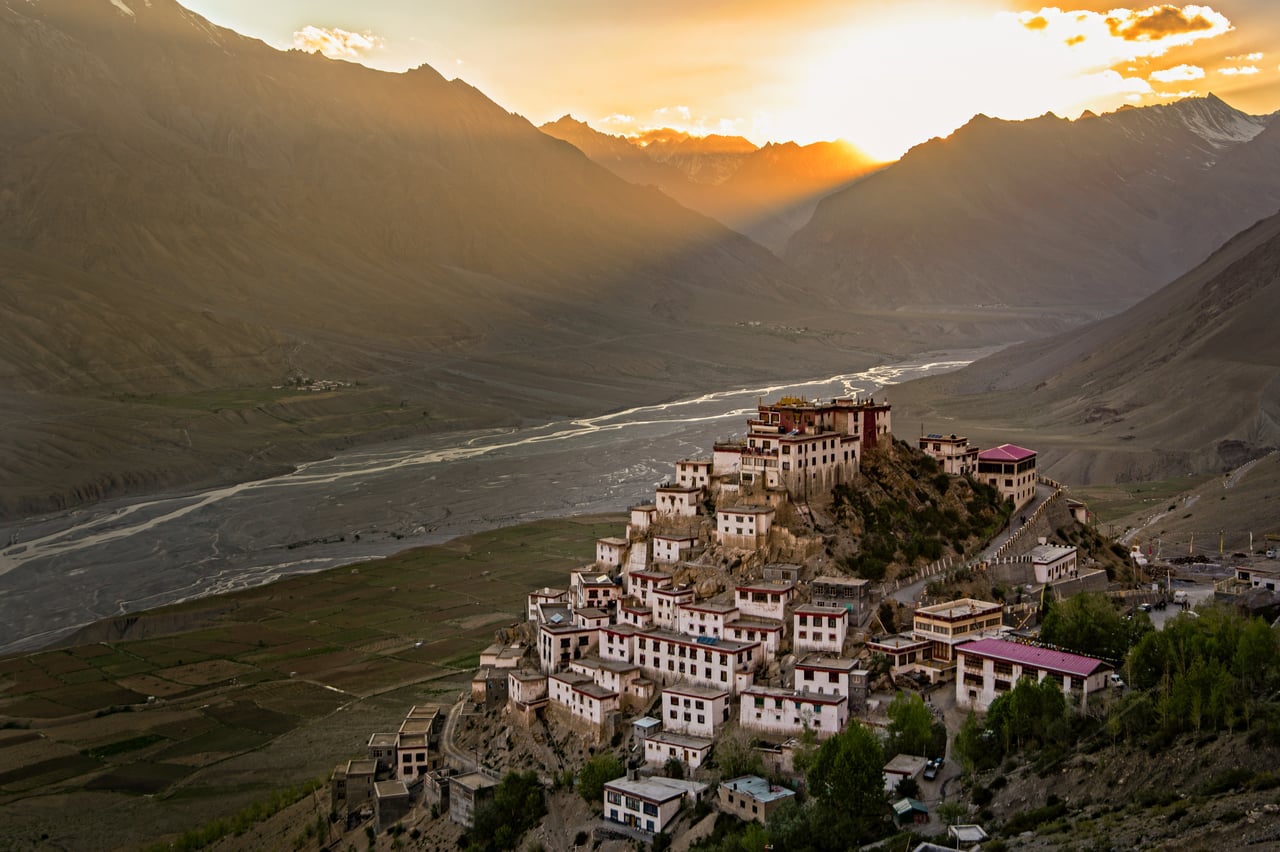
When joining our Spiti Winter Expedition, we ascend gradually via the Kinnaur highway over three days. Sleeping at Sangla (~2,700 m) on Night 1 and Tabo (~3,280 m) on Night 2 gives your red blood cells time to multiply naturally before we reach the high plateau of Kaza (~3,650 m).
3. Drink Warm Fluids Like It Is Your Job
Cold mountain air is dry, and your increased breathing rate causes rapid fluid loss through your breath. Dehydration mimics and worsens AMS symptoms.
Drink 3.5 to 4 litres of fluids daily. Stick to warm water, ginger lemon tea, local herbal concoctions, and clear garlic soup (a beloved traditional mountain remedy known for easing circulation). Avoid alcohol and smoking during the first 48 hours, as both depress your respiratory system.
4. Check Your Ego at the Base Camp
Fitness does not make you immune to altitude. A seasoned gym-goer who sprints up a trail will get a headache long before a relaxed walker taking slow, rhythmic steps.
Match your walking pace to your breath. If you cannot speak a full sentence without gasping, slow your pace by half. Mountain travel is an endurance dance, not a 100-metre dash.
Questions About High Altitude Travel?
Our team monitors oxygen levels daily with pulse oximeters and designs itineraries with built-in acclimatization days. Message us on WhatsApp to talk about your route readiness.
Spotting Symptoms: Mild Headache vs Red Flags
It is completely normal to feel slightly breathless when climbing a flight of stairs on your first day in Kaza or summiting Yulla Kanda. Here is how to tell normal adaptation from an issue that needs attention:
- Mild, Normal Symptoms: A dull headache behind your temples that eases after drinking warm water and resting, slight loss of appetite, or lighter sleep. These usually clear up within 24 hours.
- Red Flags (Requires Action): A pounding headache that does not respond to hydration or paracetamol, persistent vomiting, loss of coordination (stumbling while walking), or an uncontrollable wet cough.
The golden rule of mountain safety is simple: never ascend with worsening symptoms. If someone feels unwell, resting or descending even 300 to 500 metres provides almost immediate relief.
Diamox, Garlic Soup, and What Actually Works
A question travellers frequently ask AI and trip leaders is whether they should take Diamox (Acetazolamide).
Diamox is a preventive medication that acidifies your blood, stimulating your brain to breathe faster and absorb more oxygen during rest. While helpful, it is not a magical shortcut. It causes mild side effects like tingling sensations in your fingers and frequent urination, which increases your risk of dehydration. Always consult your personal physician before taking it.
In traditional Spitian homestays, you will often be offered hot bowls of clear garlic soup (chhurpi or vegetable broth infused with fresh crushed garlic). Garlic contains natural compounds that assist circulation and blood flow in cold conditions. Paired with 3.5 to 4 litres of warm water throughout the day, simple hydration and warm food work wonders.
Himalayan Altitude & Acclimatization Reference
| Destination | Elevation | Acclimatization Role & Safe Strategy |
|---|---|---|
| Sangla Valley | 2,696 m | Ideal first night stop; gentle valley air eases adaptation |
| Tabo Village | 3,280 m | Critical stepping stone; sleep low before moving to Kaza |
| Chopta Base | 2,680 m | Forested, oxygen-rich meadow base for Garhwal climbs |
| Kaza (Spiti Hub) | 3,650 m | Main high-altitude stay; rest first afternoon, slow pace |
| Chandrashila Peak | 4,000 m | Summit day push; descend immediately to forest camps |
| Hikkim & Langza | 4,400 m | High day excursion; stay well-hydrated, no sprinting |
When you travel on our Spiti Winter Expedition or our Himalayan group treks, you never have to make these judgment calls alone. Our trip captains carry pulse oximeters and medical first-aid kits, checking everyone’s vitals morning and night.
Stay hydrated, take slow deep breaths, and let the mountains welcome you at their own majestic pace.
Ready to take on the heights with safe, gradual acclimatization? Check out our high-altitude journeys:


