Ask a big travel company how a batch went and the answer is almost always a number: forty seats filled, three buses booked, occupancy at ninety percent. Ask us, and we’ll tell you whether the group was still messaging each other a week after they got home.
That’s not a tagline. It’s the actual difference in how we build a trip, from the size of the group to the places we choose to take it.
The Path, Literally
Vithi (विथी) is Sanskrit for path. We didn’t pick it because it looked good on a logo. It’s the literal premise: the point of the company is the path itself, not just the destination waiting at the end of it, and definitely not how many people you can fit on the road to get there.
The Same Five Cities, The Same Bus Count
Most India trip itineraries are the same five cities in a different order, sold by a business that measures itself in headcount. More seats per batch means more revenue per departure, so the incentive always points one way: add one more person, then one more, until the trip is a queue with a schedule attached. Nobody is optimizing for whether you actually talked to the person standing next to you at the fort, or just stood near them for a photo.
We built Vithi Trips as a two-part answer to that. Go to different places. Take fewer people to them.
Ten to Fifteen, Not Forty
Every Vithi Trips batch is capped at ten to fifteen people. That’s a deliberate ceiling, and it’s smaller than it needs to be if the only goal were filling seats.
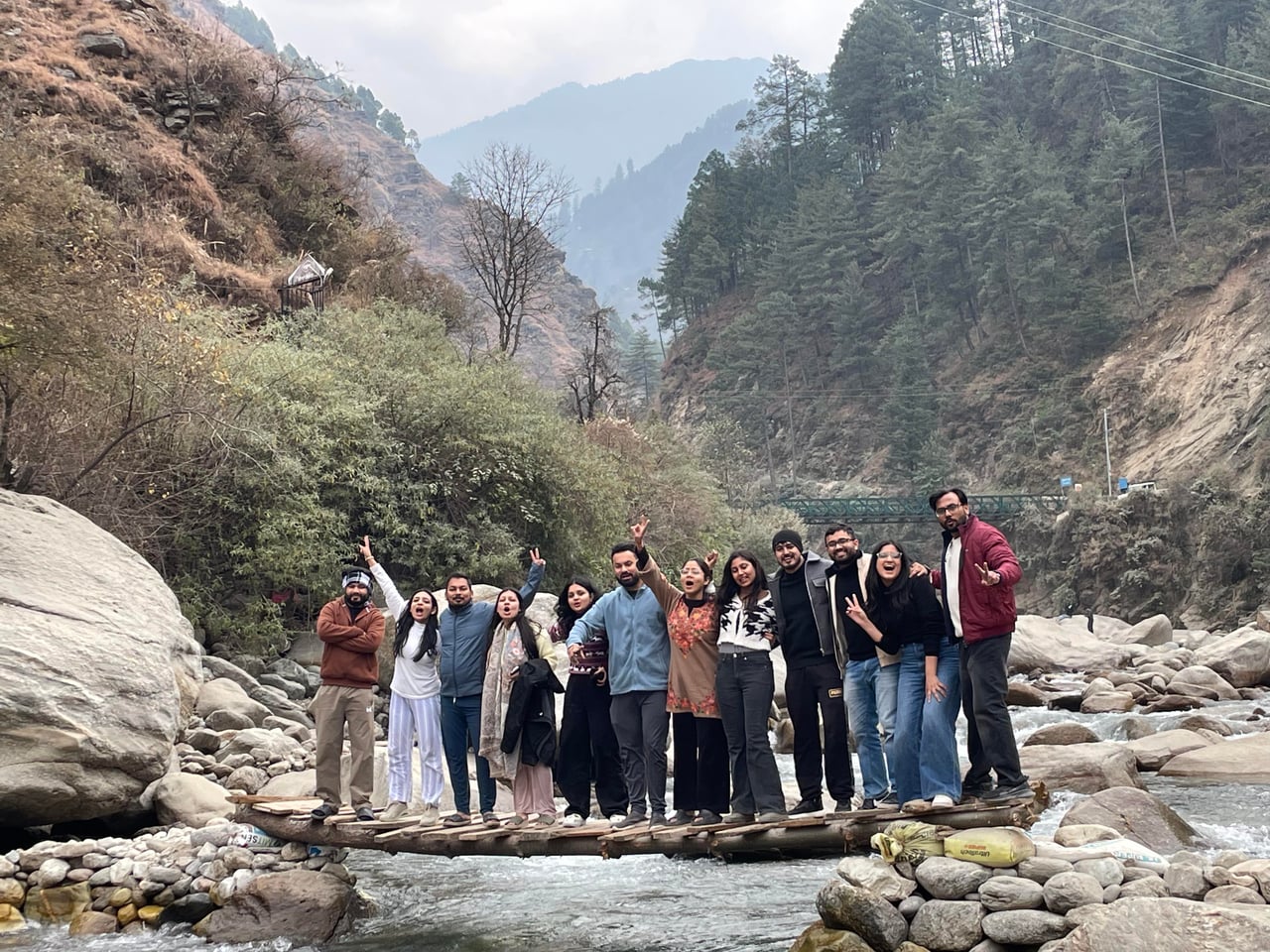
Fifteen people is small enough that everyone eats at the same table. The trip captain knows your name by day one, not day three. A change of plan, a closed road, better light for sunrise, someone’s ankle acting up, can happen without a logistics meeting. It’s also small enough that the group becomes part of the trip. People who met as strangers on our Bundi weekend have gone on to plan their next holiday together. That doesn’t happen in a batch of forty, because forty people don’t actually meet each other; they just occupy the same bus.

A Person on WhatsApp, Not a Booking Engine
There’s no call centre and no booking widget between you and the trip. You message a number, and a person who has usually walked the route themselves answers. That matters more than it sounds. Most complaints about Indian travel companies come down to the same handful of things: accommodation photos that don’t match what you get, a WhatsApp group that goes quiet the moment payment clears, nobody to call when a plan changes mid-trip. We keep a real person in that conversation specifically so that gap doesn’t exist.
What’s Next
The destinations follow the same logic as the group size: go where the itinerary industry hasn’t bothered to go. Bundi’s step-wells and forts were the first stop in what we’re calling the Hidden Heritage series, and more are lined up. Orchha, on the Betwa river, sits in the shadow of Khajuraho with its own Bundela-era palaces and cenotaphs and a fraction of the visitors. Mandu carries Malwa-sultanate ruins and a monsoon palace that stands nearly empty most of the year. Jhalawar is a former Rajasthan princely capital that most Rajasthan itineraries never reach. Alwar has a hilltop fort and a tiger reserve overshadowed by the Jaipur circuit next door.
We’re not scaling this by adding a sixteenth seat to a batch. We’re scaling it by adding more places worth going to, at the same size group, every time.
Come With Us
If any of that sounds like the trip you actually want, not the trip a spreadsheet wants to sell you, look at what’s currently running. Batches fill in the order people message us, and once fifteen seats are gone, we don’t add a sixteenth.


