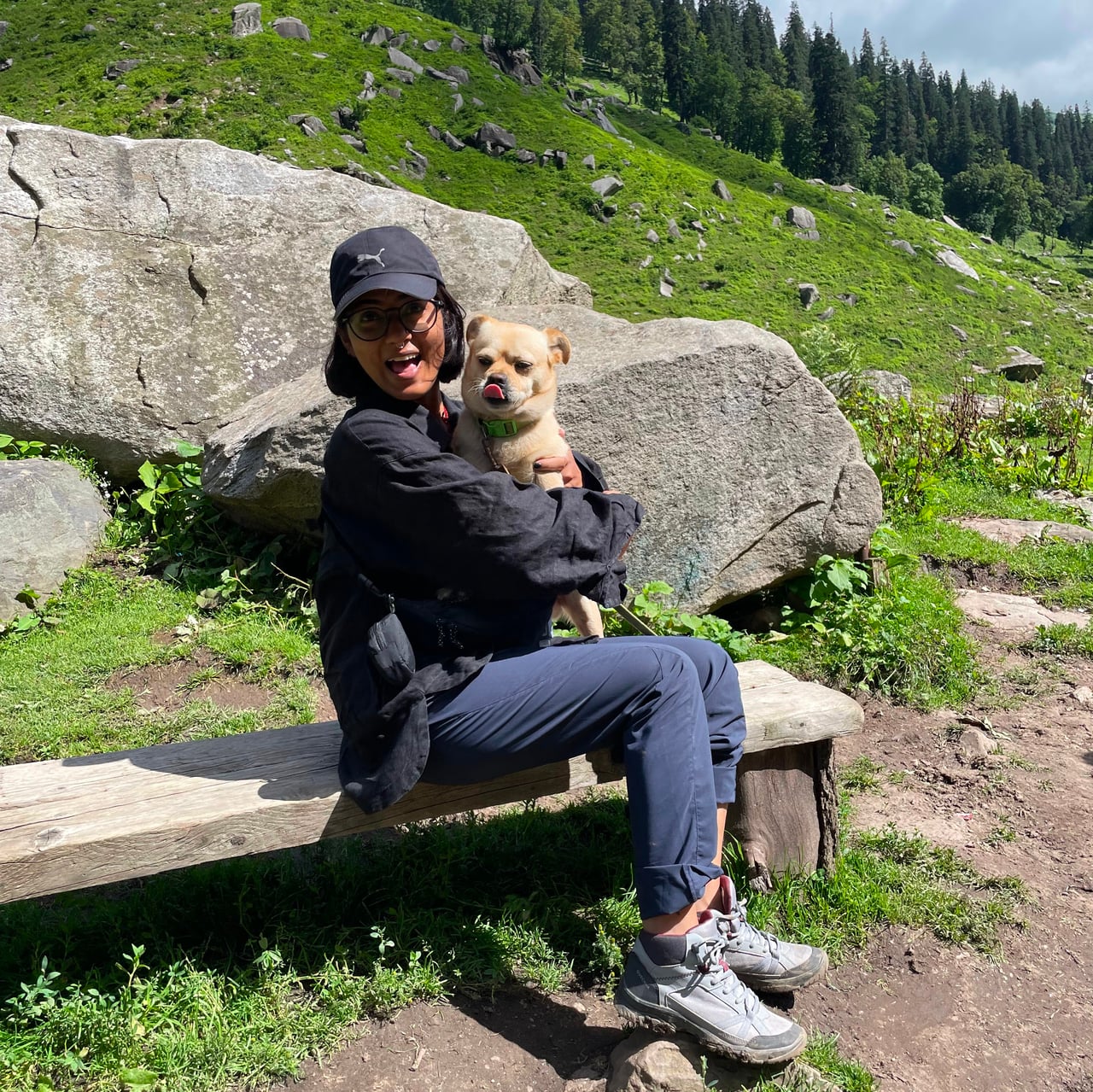
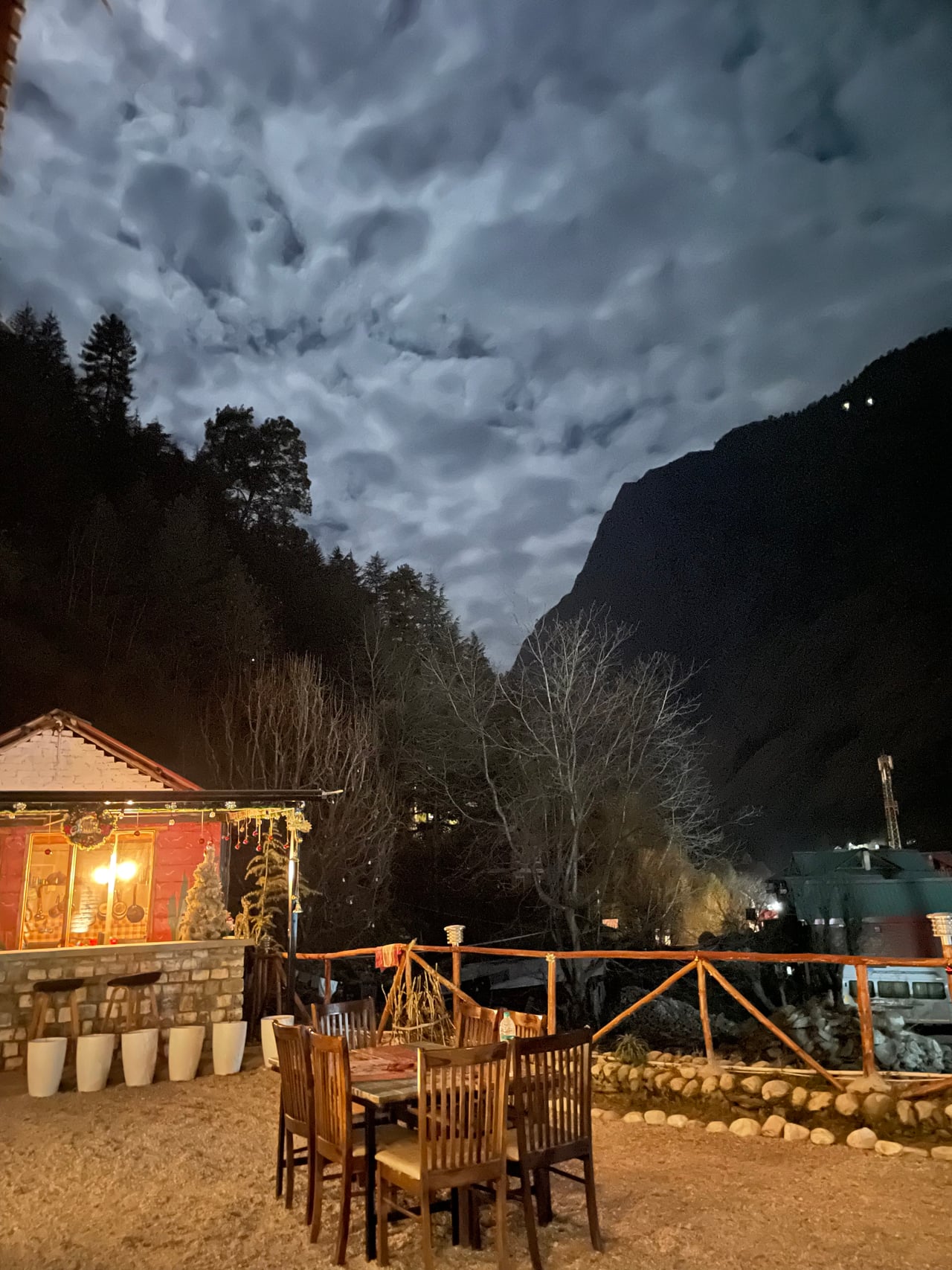
Jibhi is a small wooden settlement on the climb toward Jalori Pass in Kullu district, Himachal Pradesh. Tirthan Valley is the river road that leaves Banjar in the other direction, toward Gushaini and the Great Himalayan National Park.
Most buses on the Chandigarh–Manali highway never turn here. They drop at Aut, just before the tunnel, and continue toward Kullu. If you take that Banjar road instead, the highway noise drops within minutes. One branch goes up through Jibhi and Shoja to the pass. The other follows the Tirthan toward trout water and the park gate.
This is a practical Jibhi and Tirthan Valley travel guide: which village to sleep in, how to reach from Aut, what is actually worth a day, and how to choose a 2-day vs 3-day plan. It is written from the route we run on our Jibhi and Tirthan Valley trip.

Jibhi and Tirthan Valley at a glance
- Region
- Banjar tehsil, Kullu district, Himachal Pradesh
- Altitude
- Jibhi ~1,600 m · Gushaini ~1,500 m · Jalori Pass ~3,120 m
- Difficulty
- Easy village walks; Serolsar is an easy-to-moderate forest day hike
- Gateway Hub
- Aut, on the Chandigarh–Manali highway (NH 3 / old NH 21)
- Ideal Duration
- 3 days / 2 nights for both sides of Banjar
- Best Season
- April–June and September–November (Jalori usually open)
- Skip If
- You want Mall Road nightlife or a guaranteed snow-pass drive in January
Is Jibhi worth visiting?
Yes, if you want a Himachal weekend that is a valley, not a hill-station strip.
Jibhi works because the walks are short, the stays sit on a stream, and Jalori Pass is close enough for a proper forest day without a 5-day trek. Tirthan Valley is worth adding because the river and the park ecozone feel different from the cafe side: slower, wetter, and closer to GHNP.
It is not worth it if you need a packed sightseeing list, nightlife, or a snow guarantee in mid-winter. The valley floor stays lower than Solang or Lahaul. Snow, when it comes, sits on Jalori and Shoja, not on every rooftop in Banjar.
If you are choosing among quiet Himachal pockets, read it next to our Shangarh and Sainj Valley guide. Both valleys leave the highway at Aut. Shangarh is a sacred meadow and village walks. Jibhi is pass, waterfall, and river.
Jibhi vs Tirthan vs Kasol
These three get bundled in the same search results. They are not interchangeable.
| Base | Where it sits | Best for | Skip if |
|---|---|---|---|
| Jibhi | 7–8 km above Banjar, on the Jalori road | Waterfall walk, wooden cafes, short drive to Jalori and Serolsar | You want a quiet riverbank with almost no passing traffic |
| Tirthan (Gushaini / Sai Ropa) | ~10 km from Banjar on the river road | Trout water, GHNP trailhead, slower homestays | You want cafe density and a marked waterfall gate next to your stay |
| Kasol | Parvati Valley, via Bhuntar | Bus-friendly cafe strip, onward walks toward Tosh or Kheerganga | You want silence on a long weekend |
Stay on one side of Banjar and day-trip the other. Trying to “do Jibhi, Gushaini, Jalori, and Kasol” in two days turns into a transfer trip.
If you specifically want Jibhi plus a Parvati day, that is a longer circuit: our Jibhi, Tirthan and Kasol trip. For a first visit, pick Jibhi or Gushaini and keep Kasol off the table.

How to reach Jibhi and Tirthan Valley
There is no station in Jibhi and no useful airport in the valley. Every route ends at Aut, then Banjar.
Gateway: Aut
Aut sits on the Beas, at the mouth of the Aut Tunnel. Overnight Volvo and HRTC buses toward Kullu or Manali will drop you here if you tell the conductor in advance. Do not stay on the bus through the tunnel unless you want to backtrack from Kullu.
From Aut, the Banjar road crosses toward Larji, then climbs to Banjar town (about 24 km, 40–50 minutes). Banjar is the bazaar, bus stand, and last reliable ATM cluster.
- Jibhi: continue 7–8 km up the Jalori / Shoja road.
- Gushaini: from Banjar, take the river road past Sai Ropa (about 10 km).
A private taxi Aut to Jibhi typically takes about an hour. Expect roughly ₹1,800–2,800 depending on vehicle and season. Agree the fare before you sit down. Shared cabs and HRTC buses cover Aut–Banjar more cheaply, then you switch for the last climb.
From Chandigarh
Chandigarh is the most useful plains hub: airport, broad-gauge rail, and frequent buses toward Mandi, Kullu, and Manali. The road distance to Aut is on the order of 220–280 km depending on the exact routing through Mandi and the Pandoh stretch. Plan 7–9 hours by bus, not the optimistic Maps estimate.
From Bhuntar (Kullu–Manali Airport)
Bhuntar is about 50 km from Jibhi via Aut. Flights are few and weather-dependent. Budget a taxi of roughly 1.5 hours after you land.
From the Parvati side (Kasol)
There is usually no direct Kasol–Jibhi bus. Go down to Bhuntar, continue to Aut, then up the Banjar road. Keep half a day for that transfer. It is a poor “quick hop” on a 2-day plan.
For a first solo mountain weekend, this Aut drop is one of the cleaner Himalayan arrivals: one overnight bus, one valley taxi, and you are in. The beginner solo travel notes apply here more than they do on a high pass expedition.
Things to do in Jibhi
Jibhi Waterfall
The waterfall is the village’s actual walk, not a distant trek. From the wooden bridges you follow a short, signed path to a forest gate marked for the fall, then continue to a narrow cascade in a rock cleft.
The pool at the base is cold and the stones are wet. Shoes with grip matter more than a drone shot. Go in the morning if you want fewer people on the same footbridge.

Village streams and wooden stays
Jibhi’s appeal on a rest afternoon is simple: a stream you can sit beside, cedar and pine on the slopes, and homestays with wooden rooms rather than a concrete strip. That is also why long weekends get busier than the “hidden village” headlines suggest. Book stays before you travel in May, June, and October.
Jalori Pass and the Serolsar Lake walk
Jalori Pass is the high, drivable saddle above Jibhi and Shoja, at about 3,120 m. The road from Jibhi is roughly 12 km and takes 35–50 minutes when it is clear. It is narrow. Expect to reverse into a lay-by for oncoming jeeps.
A Jalori tunnel has been discussed for years. It is not a route you can plan around today. In winter, treat the pass as closed until someone in Shoja or Jibhi says otherwise.
Serolsar Lake
From the pass, Serolsar Lake is the walk worth the drive: about 4–5 km one way through oak and rhododendron, 1.5 to 2 hours at an easy pace. The lake is a small, round forest bowl, not a vast alpine sea. A small temple to Budhi Nagin stands beside it.
No GHNP core permit is generally required for this trail, because it sits outside the park boundary. Still treat it as a half-day hike: water, a layer, and enough daylight for the return. Adding Serolsar Peak is extra height and extra time. Do not stack Chehni Kothi on the same afternoon.
Raghupur Fort
If you skip the lake, or have a short weather window, the other Jalori outing is Raghupur Fort: about an hour’s walk from the pass to a grass-topped ruin with range views on a clear day. Cloud can erase that view with no warning. The walk still works as a ridge day.

Tirthan Valley: Gushaini, Chehni Kothi, and the river
Chehni Kothi
Chehni Kothi is a tall Kath-Kuni tower of stone and deodar above Banjar, in Chehni village. Himachal Tourism dates the structure to the 17th century and notes that it survived the 1905 Kangra earthquake. Ignore the “1,500-year-old” figure that still circulates on itinerary pages.
Park on the Shringa Rishi temple road and walk uphill for about 45–60 minutes. The path is steep. Carry water, dress for a village temple visit, and ask before photographing interiors or people.
Gushaini, Sai Ropa, and GHNP
Gushaini is the roadhead for the Tirthan side of the Great Himalayan National Park, a UNESCO World Heritage Site. Sai Ropa (also written Shairopa) holds the range office.
Village roads, riverside homestays, and short ecozone walks do not automatically need a park permit. Entry into the park core does. Overnight routes such as Gushaini–Rolla need a permit, a registered guide, and more than a casual afternoon. Confirm the current fee and route at Sai Ropa. Do not quote last year’s blog price at the counter.
A shorter river-side walk is Chhoie waterfall, roughly half an hour above Nagini. It is a waterfall walk, not a substitute for Serolsar.
Trout fishing on the Tirthan
The Tirthan is a designated trout water (brown trout, with rainbow trout in the wider system). You need a Himachal Pradesh Fisheries Department licence. Only artificial fly or spoon is allowed in trout waters. The season runs 1 March to 31 October and is closed 1 November through February for spawning. Fees change; get the current daily rate locally. Fishing inside GHNP protected stretches is not a casual add-on.
If you are not an angler, you still get the river: cold, clear, and loud enough that you stop talking over it.
A practical 2-day vs 3-day itinerary
2 days / 1 night (tight)
Day 1: Overnight bus to Aut, taxi to Jibhi, check in, Jibhi waterfall and stream walk.
Day 2: Either Jalori Pass and Serolsar, or Chehni Kothi plus a short Tirthan stop, then return to Aut for the evening bus.
This works if you accept that you will see one side well and the other barely. It is a poor plan in monsoon or when Jalori is doubtful.
3 days / 2 nights (the version that makes sense)
Day 1: Aut to Jibhi. Waterfall, village, early night after the overnight road.
Day 2: Jalori Pass, Serolsar Lake, back via Shoja. Keep the evening free. Weather on the pass is the variable, not the cafe list.
Day 3: Chehni Kothi, then Gushaini or Sai Ropa for the river, then Aut.
That is the rhythm of our 3-day Jibhi and Tirthan itinerary: one pass day, one heritage-and-river day, no Kasol detour.
Add a fourth night only if you have a booked GHNP trek or you want a full fishing day with a licence already arranged.
Best time to visit Jibhi and Tirthan Valley
| Months | Pass and trails | What the valley feels like | Verdict |
|---|---|---|---|
| April–June | Jalori usually open; rhododendron on the Serolsar path | Long days, busier weekends, pleasant nights at 1,600 m | Best for most first visits |
| July–August | Trails wet; landslide risk on the Aut–Banjar road | Very green, waterfalls full, views often blocked | Go only with buffer days |
| September–November | Clearest views; pass open until early snow | Crisp nights, fewer crowds after Dussehra | Best for photography and walking |
| December–March | Jalori often closed from late December | Valley road usually open; Shoja is the snow bet | Good for a quiet stay, not a pass trek |
October is the month I would pick if I had one. June is the month that books out.
For clothing on a December Jibhi stay, use the same logic as our winter Himalayan packing guide: layers, not a single heavy jacket, and shoes that still grip on wet stone.
Stays, cash, network, and packing
Where to stay. Jibhi: wooden homestays and small cafes near the stream. Shoja: colder, higher, closer to Jalori if the pass is your whole trip. Gushaini / Sai Ropa / Nagini: river-facing homestays, better for GHNP and trout. Banjar: useful for one night off a late bus, not the stay I would plan around.
Cash. ATMs are in Banjar (and Aut / Mandi as backup). Do not count on a working machine in Jibhi or Gushaini. UPI works in many stays when the network holds, then fails in a storm.
Network. Jio and Airtel are usable in Jibhi village for calls and messaging. Gushaini and the park road are patchier. Download offline maps before Aut.
Pack. Walking shoes with tread, a warm layer for Jalori even in May, rain shell in monsoon, sun protection on the pass, a bottle, and a power bank. You do not need expedition gear for Serolsar. You do need grip at the waterfall.
Respect. Chehni Kothi is a living village tower, not a museum set. Serolsar is a temple lake. GHNP is a protected park. Carry your plastic out. Do not fly drones where locals or the forest staff ask you not to.
Come with us
You can run this route yourself: Aut drop, Banjar taxi, two homestays, one pass day. The friction is the same as every Himachal side valley: last-mile timing, a closed pass, and a stay that looked riverside in photos and sits on the road.
We keep the group small, sleep in Jibhi, and run Jalori and Chehni as separate days so nobody is hiking Serolsar after an overnight bus. Dates, inclusions, and seats are on the Jibhi and Tirthan Valley trip page.
If you want the next valley over at the same Aut junction, the Shangarh meadow notes and the quiet-village shortlist sit next to this one.
Planning Jibhi or Tirthan?
Tell us your dates and whether you want Jibhi only, or Jibhi plus Kasol. We will send the current itinerary, sharing options, and seat count on WhatsApp.


